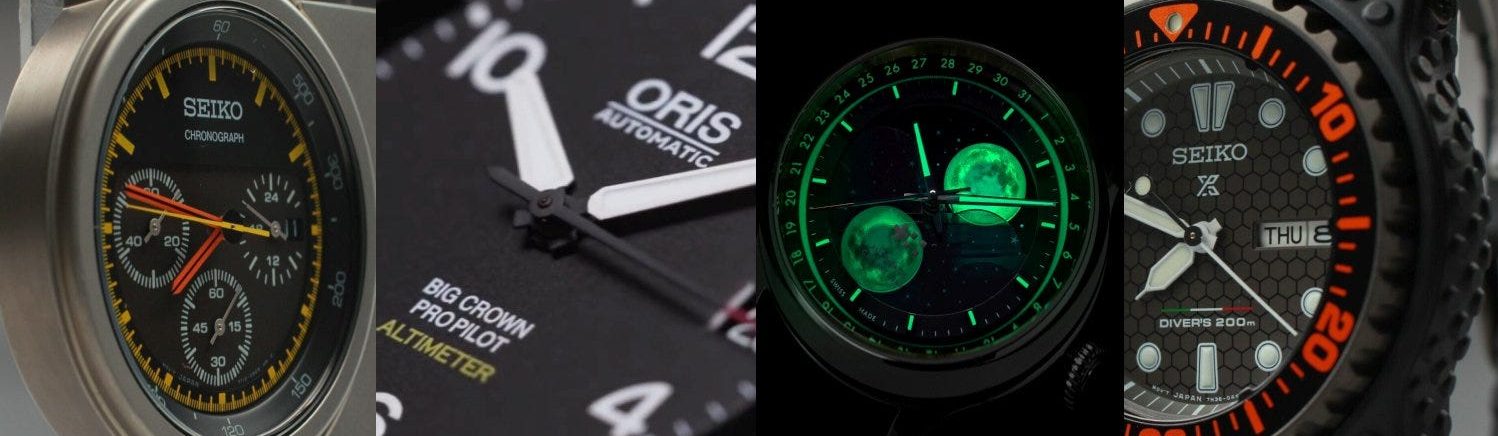

Be A Survivor with the Master of G – Land Rangeman!

If the G-Shock Master Of G Rangeman was out in 1987, then surely Arnie would have ditched his Seiko H558 for one of these G-Shocks!
I am not a diver, but I have diver watches. I am not a pilot, but I still love my pilot watches. I am not a mountaineer or a climber, and I am not visiting the desert any time soon, but I love this premium G-Shock.
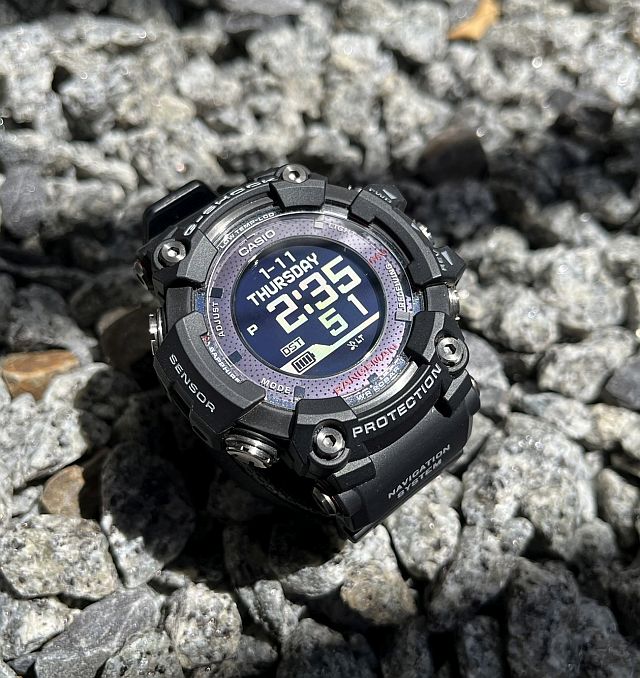
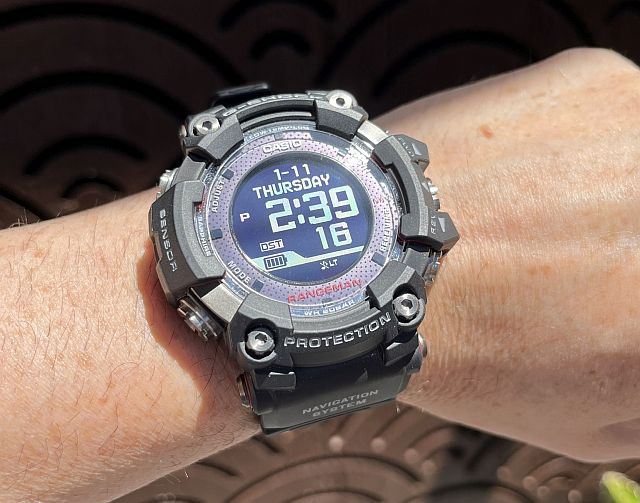
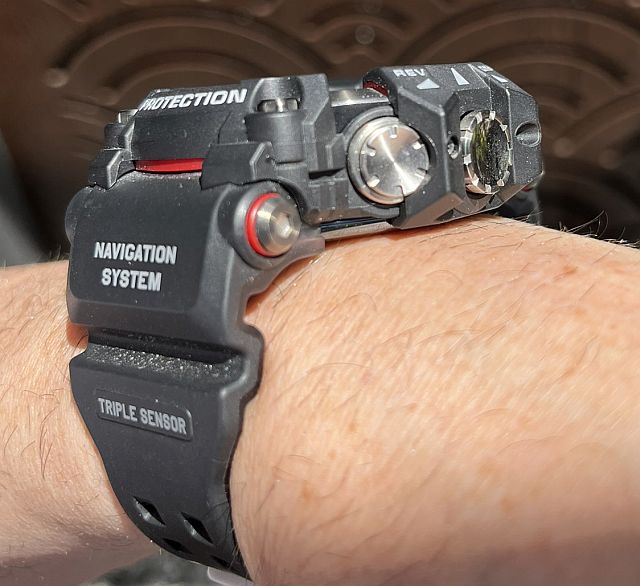
I mean what’s there not to love? Apart from making a statement on the wrist, which will no doubt cause folks to ask about it, the G-Shock Rangeman GPR-B1000-1 is packed with useful features and build quality to put certain other brands to shame.
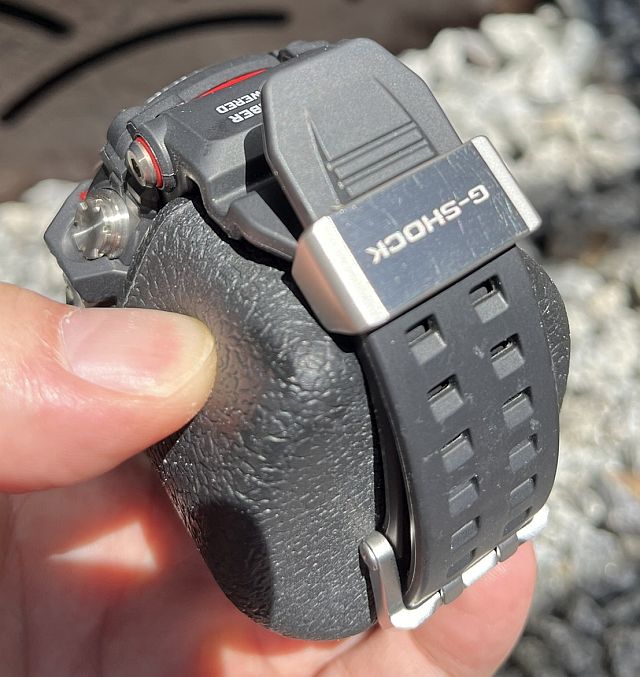
Let’s start with the physical aspects of this G-Shock. Like I said, it is big at 57mm, but once you put it on, it is surprisingly comfortable. This comfort is achieved by an awesome carbon fiber insert resin band, the 2mm thick ceramic caseback and rounded lug inserts that hug the wrist perfectly. For such a hefty watch, the Rangeman comes in at a smidge over 140g!
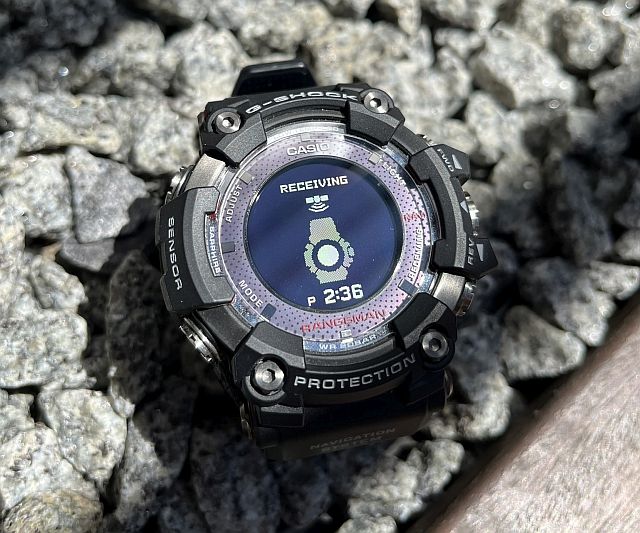

Casio threw all the bells and whistles on the GPR-B1000-1, like the low-temp resistance (–20°C) MIP LCD, sapphire crystal with AR coating and tough solar movement that can either be charged by our star (or any light source) or via the pack-in charger (Type-A USB terminal) just to name a few.

With all these exotic physical attributes, this special Rangeman comes with more features than you’ll ever need or even use. From the world’s first (in 2018) solar-assisted GPS navigation (with navigation logging, backtrack and point memory), to its mobile link via Bluetooth, digital compass, altimeter, barometer and thermometer, you will never ever get lost with this watch.
But wait, there is more! The usual other features like world time (300 cities), stopwatch, countdown timer, 4 daily alarms, tides/moon and sunrise, sunset time display and sunrise time and sunset time for a specific date. Like I said, this watch is packed with cool stuff!
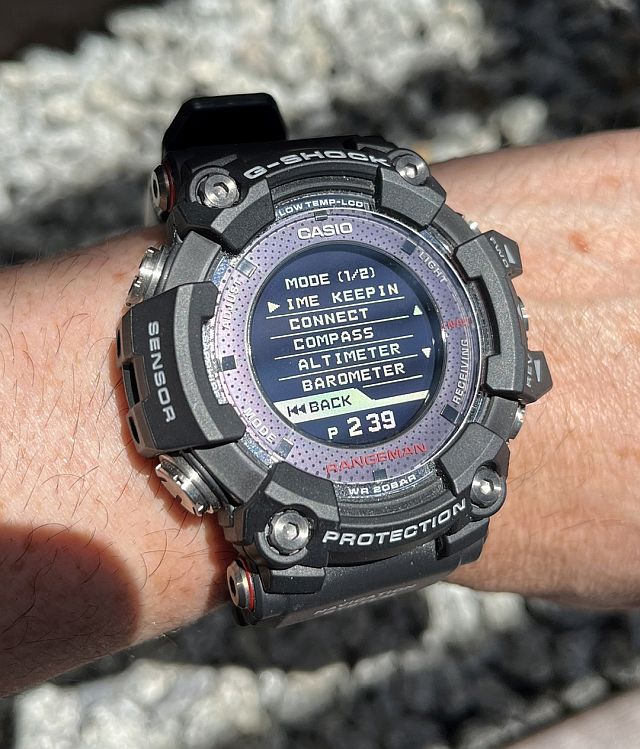
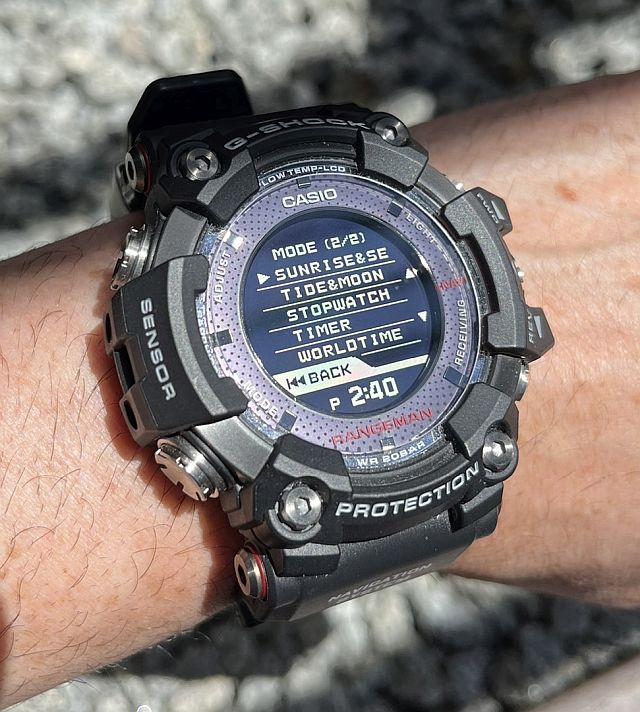
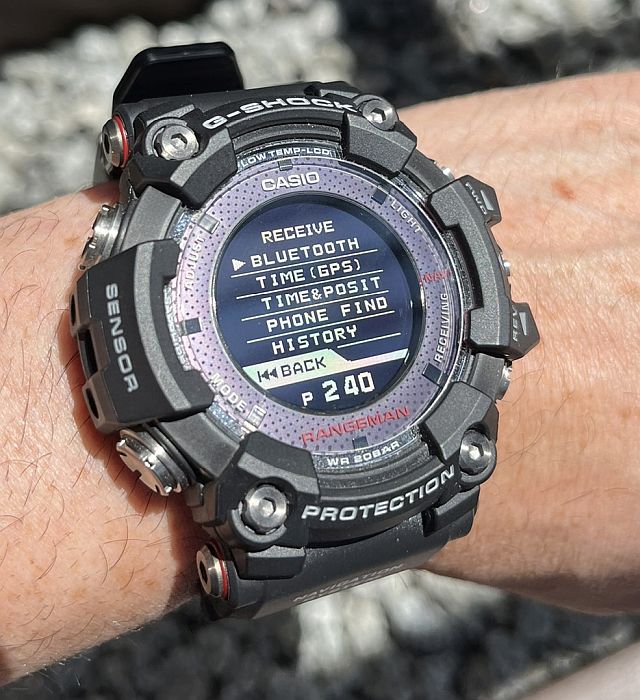
Oh yeah, this beast is of course shock, dust, water and mud resistant, so you never have to worry about it getting battered around. The pushers are also solid as heck, as is the cool crown wheel which is used to cycle through menu options – it is perfect for a fidget spinner like myself.
I know G-Shocks are (usually) an acquired taste, but their popularity is assured with models like the GPR-B1000-1.

Specifications
| Construction | Shock-resistant; low-temperature resistance (-20°C / -4°F); mud-resistant | |
| Water Resistance | 200 meters | |
| GPS Signal Frequency | 1575.42 MHz | |
| GPS Signal Reception | Time-calibration (auto*1, manual); acquisition of position information (manual) *1 GPS signals are received automatically when the watch recognizes they are available in the area. | |
| Communication Specifications | Communication Standard | Bluetooth® low energy |
| Signal Range | Up to 2 m (may differ depending on surrounding conditions) | |
| GPS Navigation | Activity logs (up to 20 logs), track display (wide area map/magnified map switching), start-to-destination direct distance, bearing to destination, destination setting from Point Memory recordings, backtrack, activity time measurement, log use status | |
| Point Memory | Up to 60 sets of point data (time, date, longitude/latitude, altitude, atmospheric pressure, temperature), point icons | |
| Digital Compass | Measures and displays direction as one of 16 points; measuring range: 0° to 359°; measuring unit: 1°; 60 seconds continuous measurement; bidirectional calibration and magnetic declination correction; bearing memory (records and display one set of degree and direction); graphical display of north, south, east and west; auto horizontal compensation | |
| Barometer | Measuring range: 260 hPa to 1,100 hPa (7.65 inHg to 32.45 inHg); measuring unit: 1 hPa (0.05 inHg); atmospheric pressure tendency graph (past 48 hours graph display); atmospheric pressure tendency alarm (arrow indicates significant pressure changes) | |
| Altimeter | Measuring range: -700 m to 10,000 m (-2,300 ft. to 32,800 ft.); measuring unit: 1 m (5 ft.); relative altitude readings (-3,000 m to 3,000 m); altitude tendency graph | |
| Thermometer | Measuring range: -10°C to 60°C (14°F to 140°F); measuring unit: 0.1°C (0.2°F) | |
| World Time | 39 cities (39 time zones*2, daylight saving on/off) and Coordinated Universal Time; auto summer time (DST) switching *2 May be updated when connected to a smartphone. | |
| Stopwatch | 1 second; measuring capacity: 999:59’59; measuring modes: elapsed time, split time | |
| Countdown Timer | Measuring unit: 1 second (maximum 24 hours) | |
| Alarm | 4 daily alarms (with snooze alarm) | |
| Other Functions | Mobile Link functions (world time: over 300 cities, auto time adjustment, One-Touch Time Adjustment, easy watch setting, phone finder, route setting and log data management in GPS navigation, tide graph, moon data); day and date display; full auto-calendar; auto LED backlight with afterglow: 1.5/3.0 seconds; battery level indicator; 12/24-hour format; airplane mode; button operation tone on/off; sunrise/sunset time display | |
| Power Source | Solar powered system (solar-charging system), charging system compatible with wireless chargers (requires device with Type-A USB terminal) | |
| Continuous Operation | With GPS use • NORMAL (Intermittent reception): Approx. 33 hours • HIGH RATE (Continuous reception): Approx. 20 hours * Approx. two months more for non-GPS functionsWithout GPS use About 29 months with the power-saving function*3 ON after full charge *3 Power-saving after a certain period in a dark location | |
| Size of Case | 60.3 × 57.7 × 20.2 mm | |
| Total Weight | Approx. 142g | |


 GNOMONIST
Leave a comment